
Throughout LE/CIVL 2150, I developed comprehensive proficiency in AutoCAD and Revit for producing professional architectural and structural drawings. My skills evolved from basic drafting to creating complete construction documentation packages, including floor plans, structural reinforcement details, elevations, and 3D BIM models. I learned to interpret complex construction drawings, apply layer management techniques, implement proper dimensioning standards, and understand the critical relationship between architectural design and structural engineering.
My technical strengths now include structural detailing for reinforced concrete systems (slabs, beams, columns, footings), applying Canadian design standards (CSA A23.3, NBCC), creating accurate construction schedules and bills of quantities, and translating 2D plans into clear 3D visualizations. As part of MJH Designs team, I contributed to a comprehensive single-family residence design project for Client Tim, delivering complete architectural and structural documentation that met professional industry standards. My career goal is to work in structural design consulting, where I can apply these technical communication skills to deliver safe, efficient, and constructible building solutions.
Final Term Project - LE/CIVL 2150 | Team: MJH Designs | Client: Tim (Osama Barakat)
As a key member of MJH Designs, I contributed to the complete architectural and structural design of a three-storey single-family residence (basement + ground floor + second floor). The project required satisfying specific client constraints including a 300 m² building footprint, basement parking, backyard pool integration, minimum 6 rooms with ensuite master bedroom, and 3 bathrooms, all while adhering to Canadian building codes and foundation requirements for freeze-thaw durability.
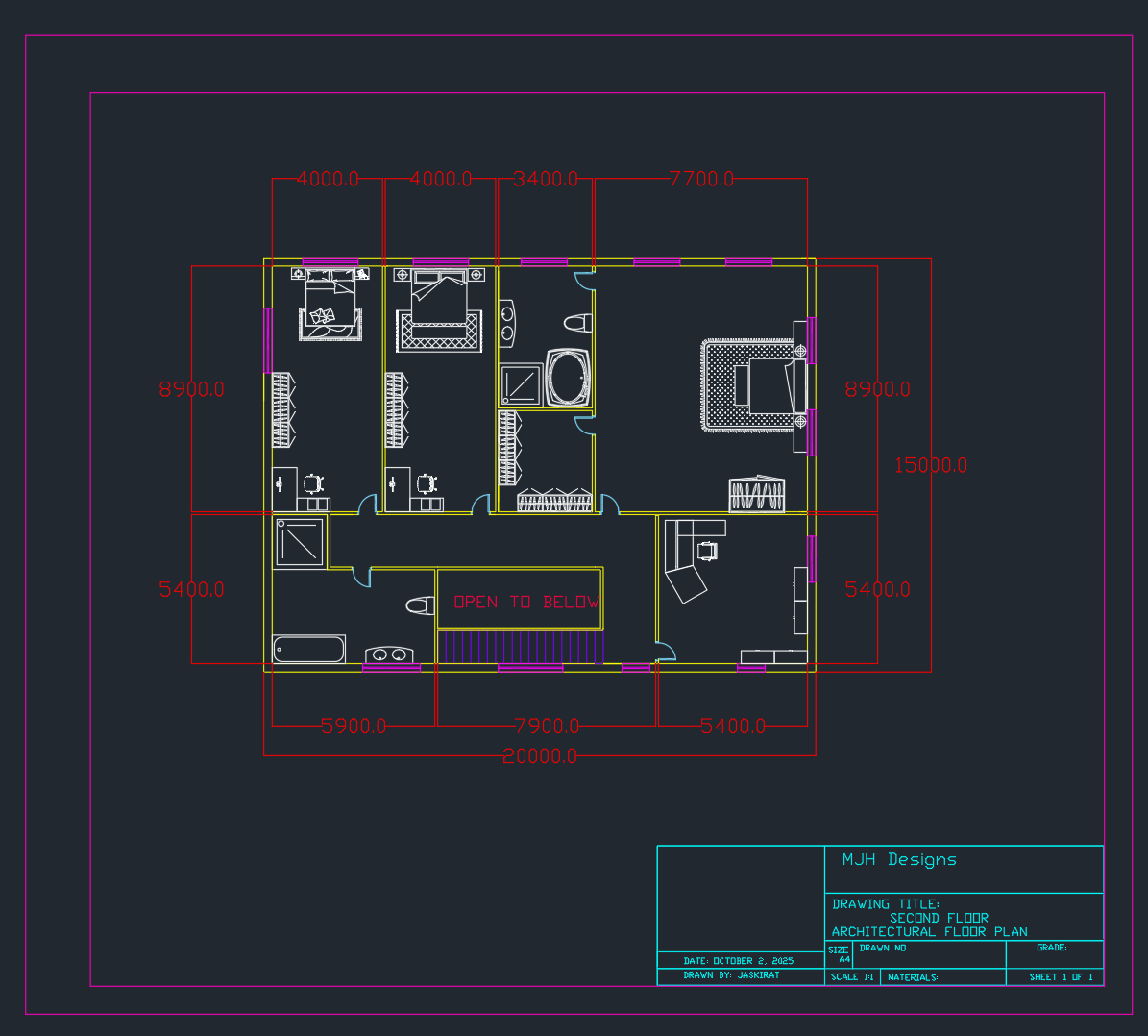
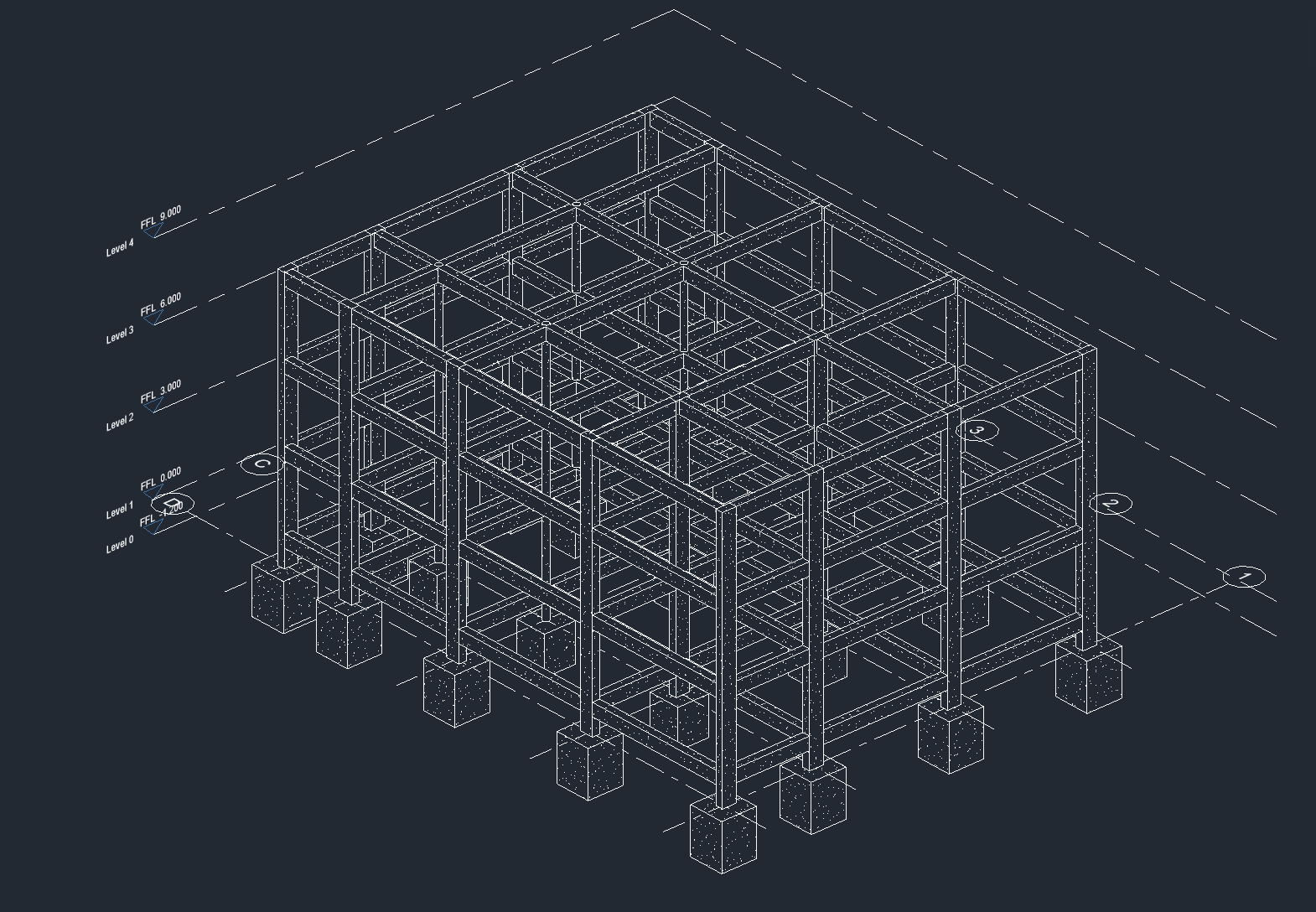
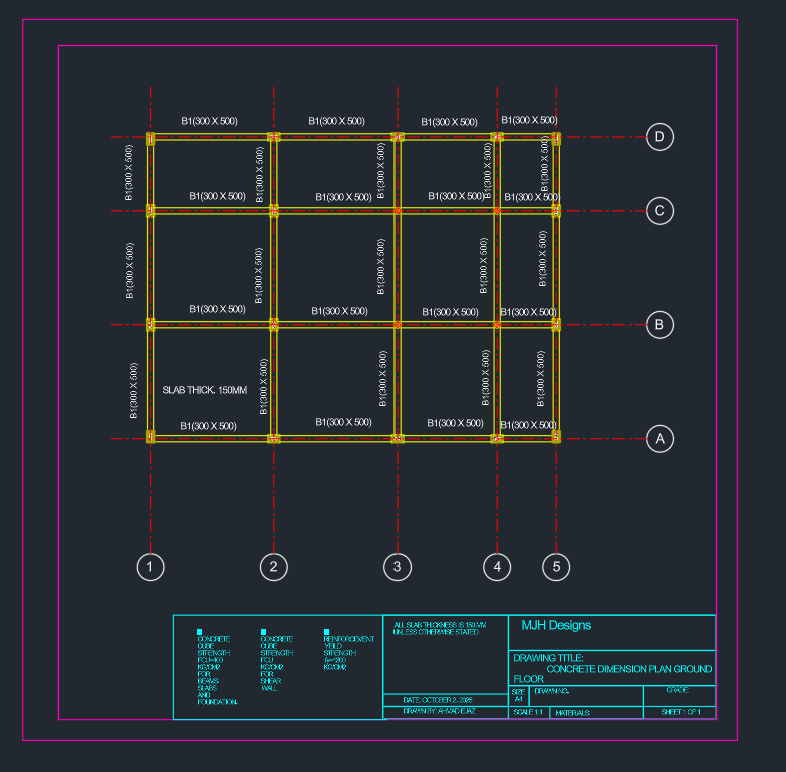
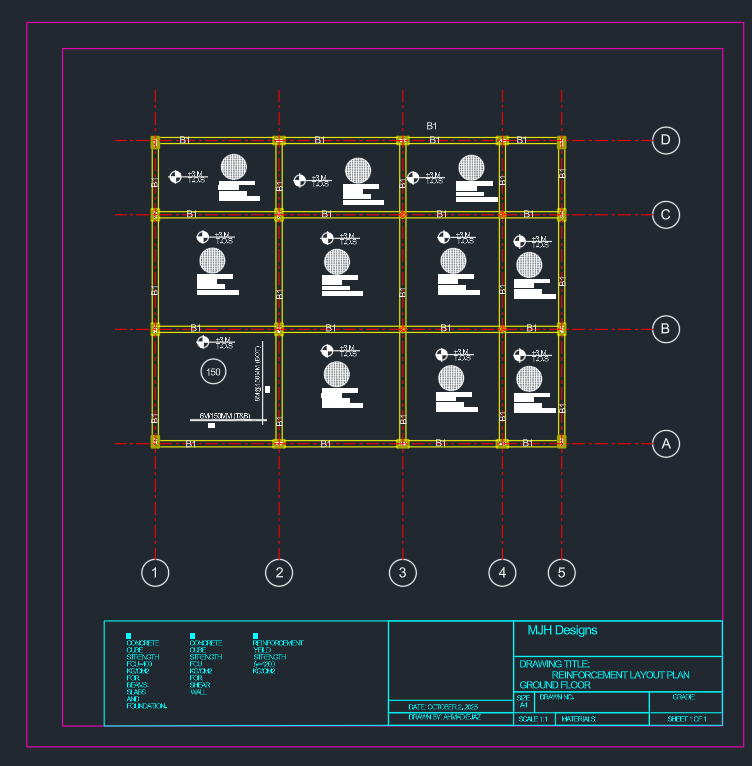
Sample deliverables from the final project package (AutoCAD and Revit outputs)
Architectural Work:
Structural Work:
Contributed to creating both AutoCAD 3D structural wireframe model and Revit BIM model showing complete structural system integration across all three floors. The Revit model demonstrated accurate column continuity, beam-to-column connections, and slab-to-beam support relationships.
Key Learning Outcome:
"This project taught me how architectural and structural drawings must work together as a complete construction documentation package. I learned that clarity, precision, and adherence to standards are not optional—they are safety requirements. Every dimension, every layer, every line weight communicates critical information to builders."
My early drawings had inconsistent line weights and overlapping geometry. By the final project, I mastered using proper line weights to distinguish between cut sections (thick lines) and visible elements (thin lines), making drawings much more readable for builders.
Initially struggled with layer management, often placing dimensions on the wrong layers. Through practice, I developed a systematic approach: separate layers for walls, doors/windows, structural elements, dimensions, and annotations. This made editing and printing much more efficient.
In early assignments, I didn't fully understand how beams support slabs or how columns must align vertically through all floors. By the final project, my structural plans accurately showed beam directions, column continuity, and proper support conditions—reflecting real-world structural logic.
My understanding of "which beam supports which slab" and "where loads transfer" was initially weak. Through reinforcement detailing exercises, I learned to clearly indicate beam spans, support conditions, and load paths—essential for anyone reading structural drawings.
Initially, I didn't appreciate how structural grids and column locations must remain consistent from foundation to roof. The final project forced me to coordinate all three floor plans with a common structural axis system, teaching me the importance of vertical alignment in multi-storey buildings.
Before LE/CIVL 2150, I viewed engineering drawings as mere illustrations—pictures to accompany calculations. This course fundamentally changed that perspective. I now understand that drawings are the primary language of instruction on a construction site. They are legal documents that contractors rely on to build safely and correctly.
The most important lesson I learned is that clarity is a safety requirement. A missing dimension isn't just inconvenient—it can lead to construction errors, structural inadequacy, or even collapse. An unclear detail isn't just unprofessional—it puts workers at risk and costs the project time and money. Every line, every dimension, every note must be intentional and unambiguous.
I also learned the importance of following conventions. At first, dimensioning rules and layer standards felt arbitrary. But I came to realize these conventions exist because they create a common visual language that everyone in the construction industry understands. When I dimension a beam length consistently, when I use proper hidden line notation, when I organize layers logically—I'm communicating in a way that transcends individual interpretation.
Perhaps most significantly, this course taught me about structural relationships and hierarchy. Through the final project, I learned to think vertically—how columns must align through floors, how beams frame into columns, how slabs bear on beams, how loads transfer down to footings. This understanding of structural logic made my drawings more accurate and meaningful.
In summary, LE/CIVL 2150 transformed me from someone who could "draw lines in AutoCAD" to someone who can communicate construction intent clearly and professionally. I now approach every drawing with empathy for the builder—anticipating their questions and answering them visually before they even need to ask. This is the essence of good engineering communication.